
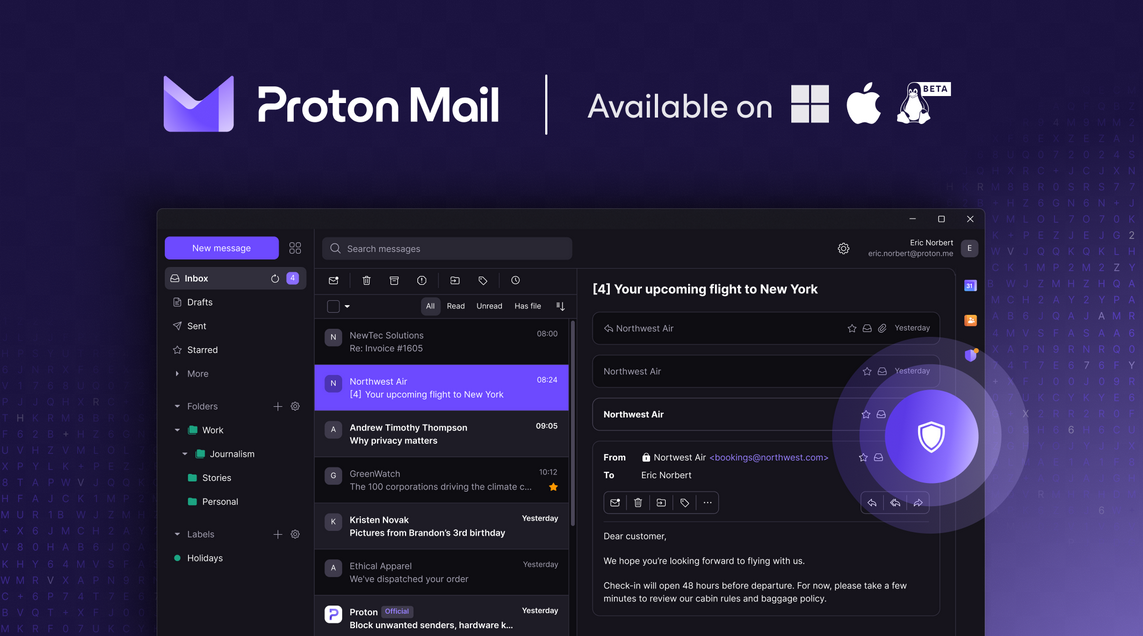
When traveling, staying connected is essential, but being online also comes with potential privacy risks. Booking flights on public Wi-Fi, checking into hotels abroad, or communicating with family can expose your email to unwanted access. For this reason, we decided to post a Proton Mail review, which offers encrypted email designed to help protect your digital correspondence.
Email is one of our most important digital assets, serving as a hub for both personal and professional communication. This makes it a common target for cyberattacks, particularly when traveling and using unfamiliar networks.
Overall, Proton Mail is a top choice for many travelers seeking secure email due to its encryption, privacy-focused jurisdiction, and integration with the broader Proton ecosystem, including Proton Unlimited. While no service can guarantee complete protection, it provides an added layer of security that can be valuable when on the go.
Table of Contents
1. What is Proton Mail?
Proton Mail is a privacy-focused email service that emphasizes strong encryption. Founded in 2014 by a team of scientists from CERN (the European Organization for Nuclear Research), Proton Mail was designed with privacy in mind, setting it apart from many “free” email providers. Based in Switzerland, a country known for robust privacy laws, it offers end-to-end encryption by default.
For travelers, this means emails are encrypted, helping to reduce the risk of unauthorized access, including from hackers or the service itself. While no system can guarantee complete security, using Proton Mail can give you greater confidence when sending emails while on the move. For even more protection, many users combine it with Proton VPN see our Proton VPN Review for more details.
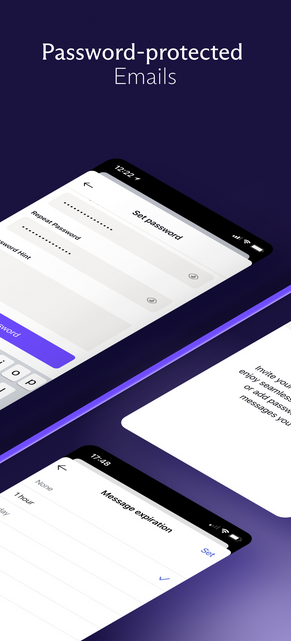
Disclaimer: End to end encryption is only possible through Proton mail if its sent to another Proton Mail account or Pretty Good Privacy (PGP) compatible email system that shares public keys. However, Proton Mail has a password-protected email feature that encrypts the message body and attachments with a shared secret (password) known only to you and the recipient. This means:
- When sending to external providers (Gmail, Yahoo, etc.), only encrypted ciphertext is visible.
- The recipient must enter a shared password to decrypt and read the message.
- Emails can be set to expire after a chosen period for added security.
- This approach provides a form of end-to-end protection, even when communicating with non-Proton Mail users.
| Scenario | Encryption Level | Who Can Read It |
|---|---|---|
| Proton → Proton | End-to-End | Only you & recipient |
| Proton → Gmail (standard) | TLS only | Gmail can access it |
| Proton → Gmail (password-protected) | End-to-End | Only you & recipient |
(Image Credit: Proton)
2. Why Travelers May Benefit from Using Proton Mail?
Traveling can expose your online activity to various privacy risks. When connecting to public Wi-Fi in cafés, hotels, or airports, you may be using networks with limited security. While public Wi-Fi isn’t inherently unsafe, it can make it easier for cyber criminals to attempt to intercept data. Using a secure, encrypted email service like Proton Mail can help add an extra layer of protection for your messages while you’re on the move.
Here are a few ways Proton Mail can be especially useful for travelers:
- End-to-End Encryption: Messages are encrypted so that only you and the recipient can read them. Not even Proton Mail can access the content. This helps keep personal and business correspondence private.
- Zero-Access Data Policy: Proton Mail does not track or log your data, reducing the chance that your information could be accessed or shared with advertisers.
- Swiss Privacy Laws: Based in Switzerland, Proton Mail benefits from strong data protection regulations, offering an extra layer of security for your information.
- Anonymous Signup: You can create a Proton Mail account without providing personal details, giving travelers additional anonymity and privacy.
3. How Does Proton Mail Work?
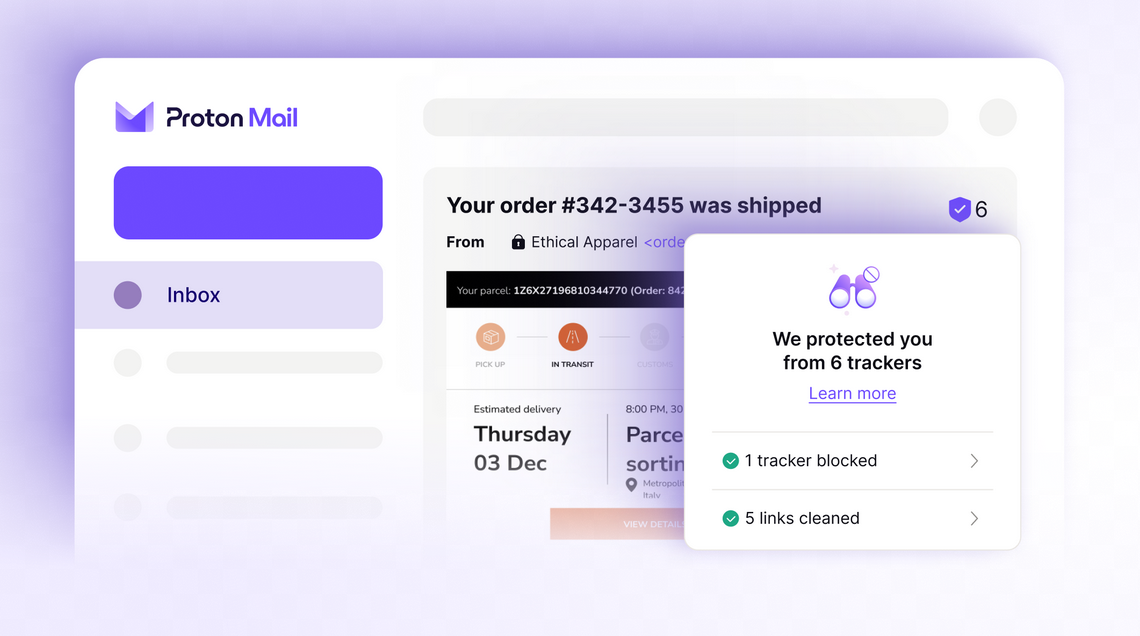
Using Proton Mail is straightforward, even for those who aren’t tech-savvy. Here’s how we’ve experienced it in practice while traveling:
- Easy Setup and Intuitive Interface: Creating an account is simple, and the interface is clean and user-friendly. You can access your emails quickly without distractions, making it ideal for checking your inbox while traveling.
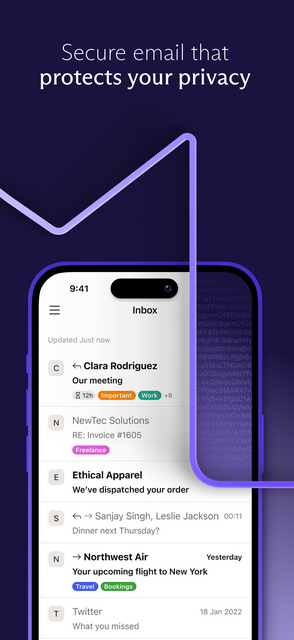
- Mobile-Friendly: Proton Mail works seamlessly on both iOS and Android. The mobile app syncs with your desktop account, so you can manage messages reliably no matter where you are.
- Self-Destructing Emails: For sensitive information like passport details or booking confirmations, Proton Mail allows you to send emails that automatically expire after a set time, providing an extra layer of security.
(Image Credit: Proton)
4. What’s the Catch?
Nothing is perfect, and Proton Mail does have a few limitations, particularly for users transitioning from “free” email providers.
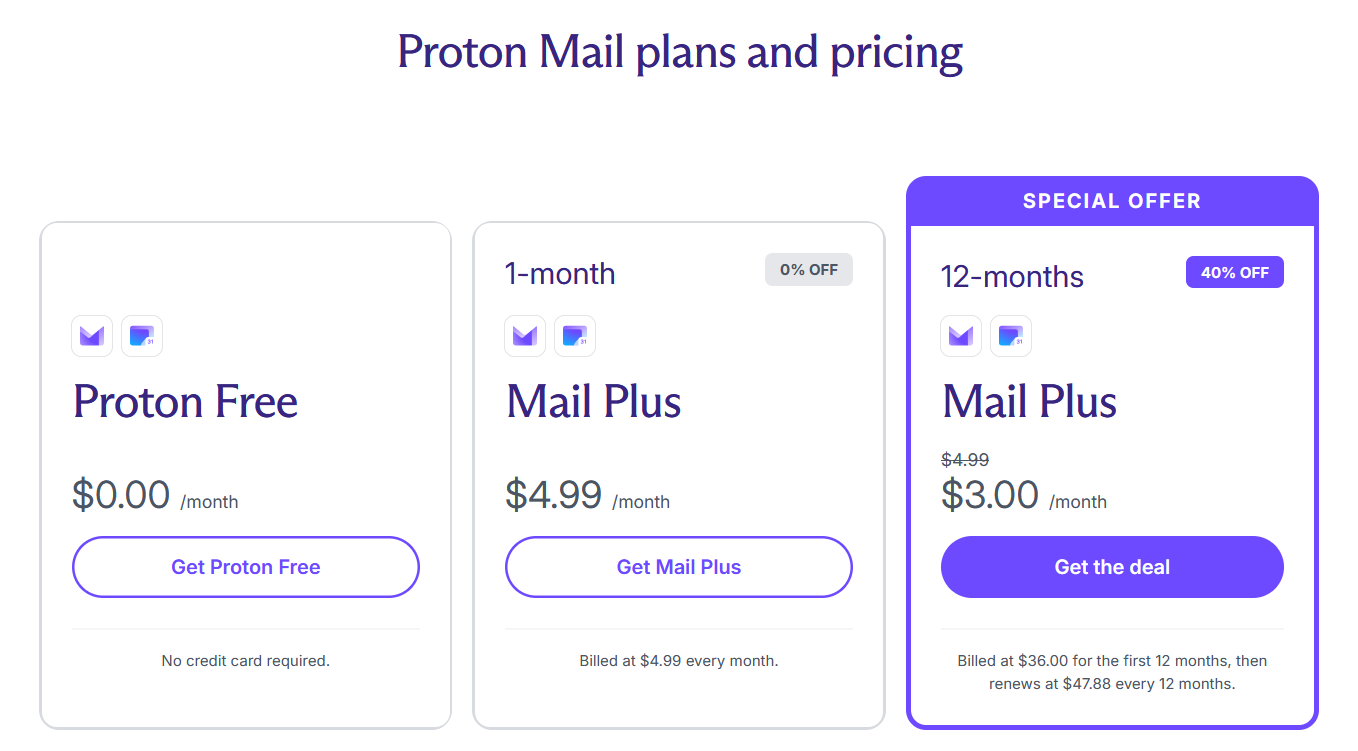
- Limited Free Plan: The free Proton Mail account includes 500 MB of storage (upgradable to 1 GB) and allows up to 150 messages per day. This is sufficient for casual use, but travelers who handle multiple bookings or business emails may find a paid plan more suitable.
- Proton Mail Free key features
- 1 email address
- Up to 1GB of dedicated Mail Storage (boost your 500 MB to 1 GB by completing the Mail-specific get started actions
- Easy Switch import assistant
- Send limit of 150 messages a day
- Paid Plans: Proton Mail Plus plan starts at around $5 per month and includes more storage, additional features, and the option for custom domains. If you need multiple accounts or larger storage, costs can increase, especially for personal use. However, Proton also offers Proton for Business, which combines multiple services under one ecosystem, making it a more comprehensive option for users who need advanced features
- Proton Mail Plus key features
- 1 user with up to 10 email addresses
- 15 GB of total storage shared with Proton Drive
- Support for 1 custom email domain
- Short domain email address (@pm.me): send and receive messages
- Unlimited labels, folders, and filters
- Email client support (via IMAP/SMTP and Proton Mail Bridge)
- Contact groups
- Auto-reply
- Catch-all email
- Easy Switch import assistant
- Password-protected Emails
- Send as many emails as you want
- Priority customer support
- Dark Web Monitoring
- 10 hide-my-email aliases
- Limited Third-Party Integrations: Unlike Gmail, Proton Mail doesn’t offer extensive integrations with external apps such as Google Calendar, Drive, or Photos. However, it does work seamlessly within its own ecosystem, especially with plans like Proton Unlimited, which bundles Proton Mail, Proton Drive, Proton VPN, Proton Pass, and more. This can provide a cohesive and secure suite of tools for travelers focused on privacy.
5. Should You Use Proton Mail While Traveling?
If privacy is a priority while traveling or in general, Proton Mail can be a strong option. The encryption and security features provide an added layer of protection for your personal information, giving peace of mind when sending emails on the go. Importantly, Proton Mail itself does not access the content of your messages, helping maintain your privacy.
For travelers, Proton Mail can offer an extra layer of security in your digital email. Additionally, its Swiss-based infrastructure and zero-access encryption policies may help reduce risks in locations where online privacy protections are limited. While no service can guarantee complete security, Proton Mail can be a valuable tool for protecting your digital correspondence during travel.
Conclusion: The Verdict on Proton Mail
Proton Mail is a strong choice for travelers and everyday users seeking a secure email service. The free version is suitable for casual use, while those needing more storage or advanced features may consider a paid plan. The added security and privacy features; especially encryption and zero-access policies, make it a worthwhile investment, particularly when you’re on the go.
Whether you’re flying internationally, exploring a new city, or looking for an email service that respects your privacy, Proton Mail is a solid choice. For an extra layer of protection while traveling, see our Proton VPN Review.
Disclaimer: The information provided in this post is for general informational purposes only and should not be considered professional, legal, or security advice. We make no representations regarding the legality of VPN or encrypted service use in any specific jurisdiction. Users are solely responsible for ensuring compliance with all applicable local laws and regulations when traveling.